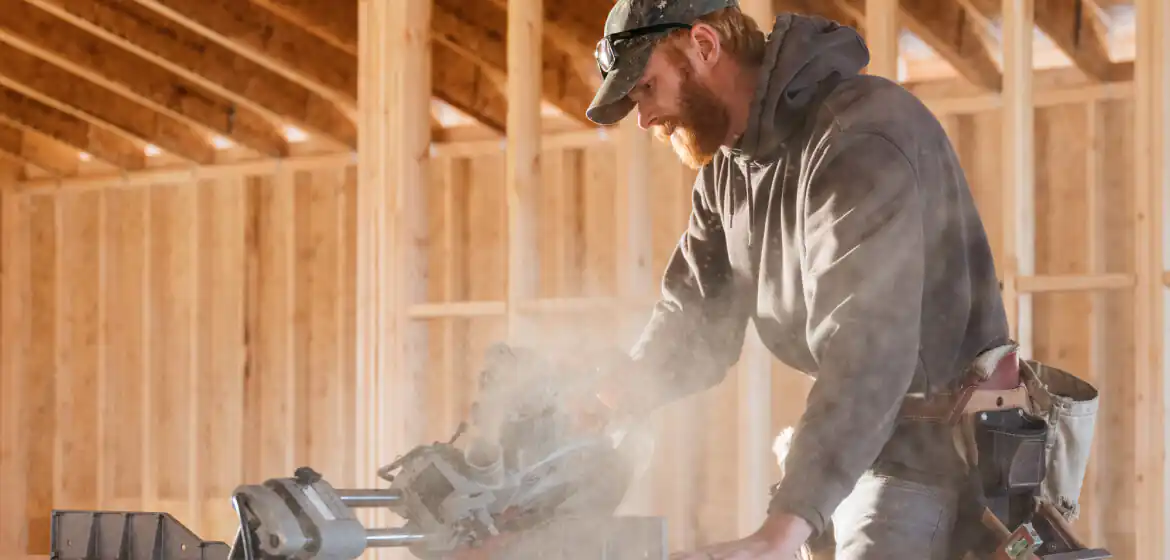
General liability insurance and workers’ compensation insurance are both types of business insurance, but the main difference between them is that a general liability policy could help with the costs of injuries or property damage for non-employees (such as customers, vendors or passersby), and a workers’ comp policy covers injuries at work only for employees. Workers’ comp insurance also tends to cover medical bills and lost wages during recovery, but it does not usually cover property damage. Both general liability and workers’ compensation coverage may be required for businesses for different reasons. And many businesses may be required to carry both.
General Liability vs. Workers’ Compensation insurance
Compare what each policy covers, who needs it and how to choose the right protection



Link copied!


What’s the difference between General Liability insurance and Workers’ Compensation insurance?
Commercial general liability and workers’ comp policies are sometimes confused since they both help with bodily injuries, but they’re not the same. Instead, they work together to help protect your business from different types of risks.
General liability insurance could help cover costs related to injuries for non-employees, property damage to other people’s property (not your own), advertising injuries, and some legal costs associated with these types of claims.
Workers’ compensation insurance could help cover medical expenses, lost wages and related costs if an employee gets injured or becomes ill because of their work.
In short: General liability focuses on risks involving customers and other third parties, while workers’ comp is designed to support your employees.
Compare General Liability insurance to Workers’ Compensation
| General liability insurance | Workers’ compensation insurance | |
|---|---|---|
| Who could it protect? | Third parties (customers, clients, vendors) | Employees |
| What could be covered? |
|
|
| Could it cover property damage? | Only damage to someone else’s property | No |
| Is it legally required? |
It can be to:
| Required in most states if you have employees |
| Insurance claim examples |
A customer slips on a wet floor at your business or job site and needs medical care**
|
An employee injures their back lifting heavy equipment at work
|
Do businesses need both General Liability and Workers’ Comp insurance coverage?
Many businesses may need both general liability and workers’ compensation insurance because they cover different types of business risks.
Many small businesses carry both policies because they address different types of protection. For example, general liability may help cover the costs of a customer injury, while workers’ comp could help cover an employee injury from the same incident. Both types of coverage may help provide more financial protection for your business.
Though rates of workplace injuries have declined, incidents are still uncomfortably common. According to the U.S. Bureau of Labor Statistics, private industry employers reported 2.5 million nonfatal workplace injuries and illnesses in 2024.
That may be a reason why many small business owners opt for workers’ comp coverage for themselves, even if it’s not required. Many self-employed workers also want help if they’re injured at work.
The right coverage depends on your type of business, how your business is set up, who you work with and the risks you face day to day.
- If you’re self-employed, a sole proprietor or an independent contractor: General liability insurance is often a strong starting point. It could help protect your business from common non-employee risks.
- If you have employees: Workers’ compensation insurance is often required in most states, so getting this coverage helps your business stay compliant.
- If you work with clients or contracts: Some clients may require proof of insurance before working with you or if you work in a high-risk industry. Having the right coverage in place could help you meet contract requirements and avoid delays.
When General Liability insurance might be enough coverage
If you’re self-employed with no employees, general liability insurance may be enough coverage for your business. It’s one of the most popular business insurance policies because it helps cover common risks like customer injuries or property damage.
Workers’ Comp insurance isn’t usually enough coverage
In most states, businesses with employees are required to carry workers’ comp. This type of insurance coverage could help support your employees if they’re injured on the job and may help your business stay compliant with state laws.
But even if you’re a sole proprietor without employees, workers’ compensation insurance may be required depending on your state, trade or client contracts. Some states or contracts may even require proof of coverage before you start work.
More small businesses are realizing the need for workers’ comp coverage and responding accordingly. In a 2025 ERGO NEXT survey of 500 small business owners, workers’ compensation adoption grew from 29% to 49% between 2023 and 2025.
Do General Liability and Workers’ Comp overlap?
General liability and workers’ compensation insurance don’t really overlap — they’re designed to cover different types of risks. That said, both policies can come into play around the same incident.
For example, say you run a cleaning business and an employee slips on a wet floor while working, injuring themselves and accidentally damaging the client’s flooring. Workers’ comp may help cover the employee’s medical expenses for the personal injury, while general liability could help cover the flooring repairs.
Both types of insurance could help protect your business financially if an accident leads to a claim or a lawsuit.

How ERGO NEXT helps protect your small business
ERGO NEXT makes it fast, easy and affordable to protect your small business — and you can do it all online.
We’ll ask a few questions about your business and give you a quote. You can select your coverage options and buy your policy in about 10 minutes. Share your certificate of insurance at no extra cost, and you can access your policy 24/7 via web or mobile app.
If you have questions, our licensed, U.S.-based insurance professionals are available to help.
General Liability vs Workers’ Compensation insurance FAQ
Get answers to the most common questions that compare these two important types of business insurance.
Can General Liability insurance replace Workers' Compensation insurance?
No — general liability and workers’ comp are two separate types of business insurance policies that cover different risks and cannot be substituted for each other.
General liability usually covers injuries or damages to people outside your business, like customers or vendors. Workers' compensation is specifically designed to provide protections for your employees (and for sole proprietors) and is legally required in most states once you have employees. General liability will not cover a workplace injury to your employee, and workers' comp will not cover a customer who is injured on your premises.
Do I need both General Liability and Workers' Compensation insurance?
Many small businesses need both general liability and workers’ compensation insurance, but it depends on your situation. If you're self-employed with no employees, general liability is typically the starting point but, depending on your work risks, you may look into workers’ compensation coverage just for yourself. If you have employees, most states legally require workers' compensation in addition to any liability coverage you carry. Having both means you can have the coverage you need whether the person harmed is a customer or a member of your team.
What happens if an accident involves both a customer and an employee at the same time?
If an accident occurs where both an employee and a non-employee (like a customer or other third-party) are injured at the same time, both general liability and workers’ comp may come into play. For example, if an employee slips while working and accidentally damages a client's property in the same incident, workers' compensation may help cover the injured employee's medical costs while general liability could help cover the cost of the client's damaged property. The policies work alongside each other for more coverage rather than unnecessarily overlapping.
Is Workers' Compensation required for part-time employees?
In most states, workers' compensation requirements apply to part-time employees, not just full-time staff. The specific rules vary by state, so it's important to check the requirements where your business operates. Going without required coverage could result in significant fines and legal exposure.
There’s a lot to love about ERGO NEXT

Get insurance in less than 10 minutes and you can save up to 25% in discounts*

Unique, flexible coverage with easy monthly payments

Do it all 100% online or talk to a licensed U.S.-based advisor
Let’s find the coverage you need for your business
Business insurance is divided into different policies. We offer seven types so it's easy to design the coverage that fits your business.
General Liability
Protect yourself from accidents that cause physical injury or damaged property.
Professional Liability/E&O
Shield yourself from lawsuits that claim your work errors caused financial losses.
Workers’ Compensation
Cover medical bills and lost wages if your employees have an accident at work.
Commercial Auto
Stay on the road with coverage for dents, tows and damage to someone else’s vehicle.
Tools & Equipment
Upgrade your general liability coverage to protect any gear that’s stolen, damaged or lost.

Commercial Property
Keep your building, inventory and equipment protected from fire or water damage.
Business Owner’s Policy
Combine general liability and commercial property into one policy to protect your business.