NEXT is now ERGO NEXT Insurance, uniting digital-first innovation with Munich Re's global financial strength.

Report: 82% of new small businesses have insurance, but many SMBs remain at risk

Report: 82% of new small businesses have insurance, but many SMBs remain at risk

New survey data shows entrepreneurs recognize the importance of prioritizing business insurance early.

Matt Crawford
ERGO NEXT Head of Content and Community
Jul 21, 2026
1 min read
Share:
Small business insuranceBuy insurance in about 10 minutes
Get a Quote

Small businesses founded in the past year are more likely to have insurance than those that have been operating longer, according to a new survey of small business owners by ERGO NEXT.

It’s an encouraging sign that today’s entrepreneurs are thinking about protection earlier, but buying insurance and being adequately protected aren’t always the same thing.

The survey also found that many entrepreneurs still struggle to determine what coverage they need, leaving critical risks exposed.

This report explores why underinsurance persists even as more businesses are getting insured — and what that says about the changing nature of small business risk.

Key findings

Our survey of 501 small business owners reveals:

  • 82% of small businesses in their first year of operation have insurance, compared with 67% in their first two to five years of operation
  • 73% of small businesses have no insurance or less coverage than they need
  • 25% of small businesses don’t have insurance
  • 64% of small businesses with coverage are underinsured
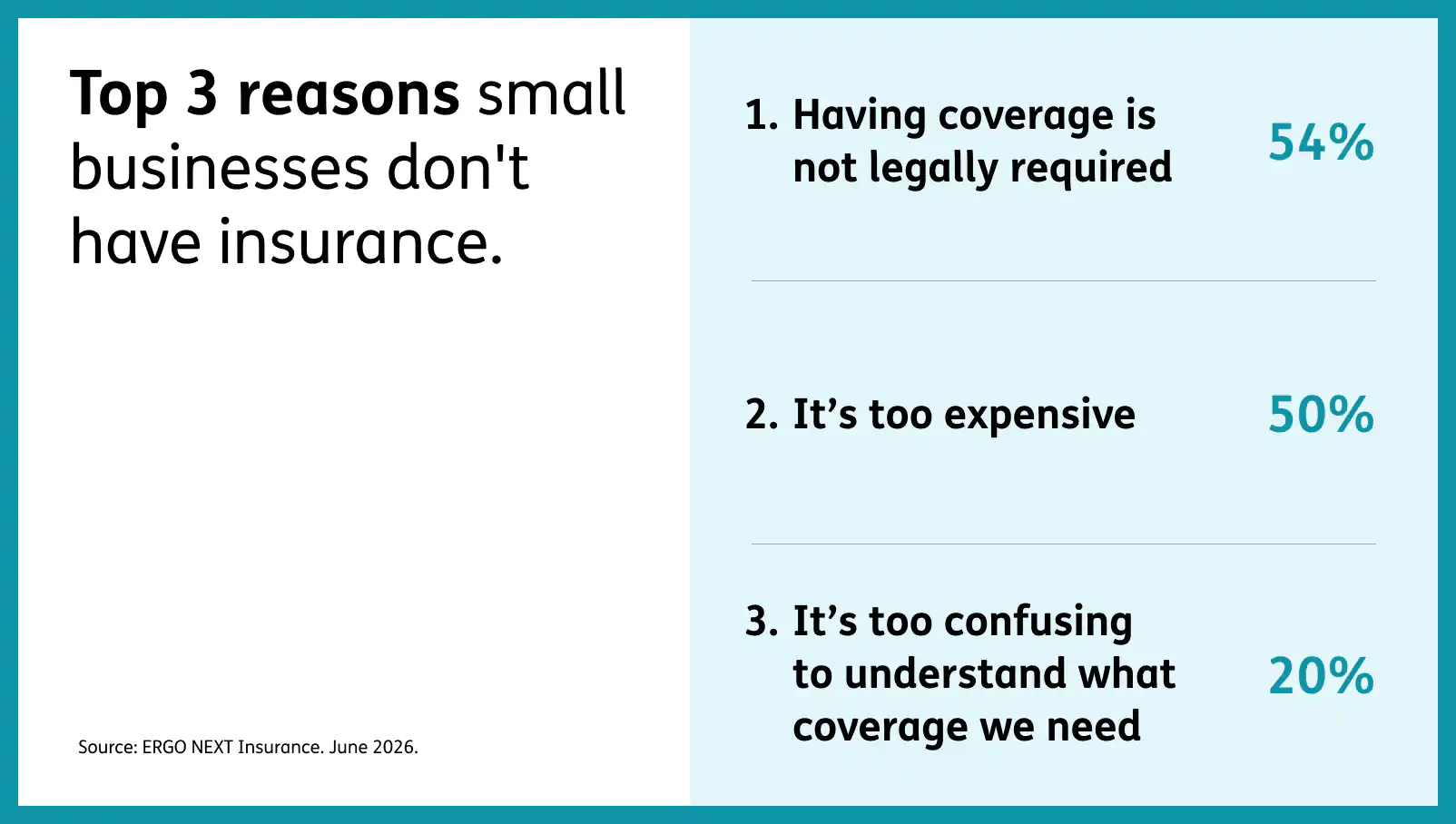
  • 50% of small businesses without insurance say it’s too expensive and 20% say it’s too confusing

Continue reading to learn more about what this data means for small businesses and the potential risks they face when they don’t have the right protection.

New entrepreneurs are prioritizing protection earlier

When is the best time to buy business insurance? The data suggests that many entrepreneurs invest in protecting their business early.

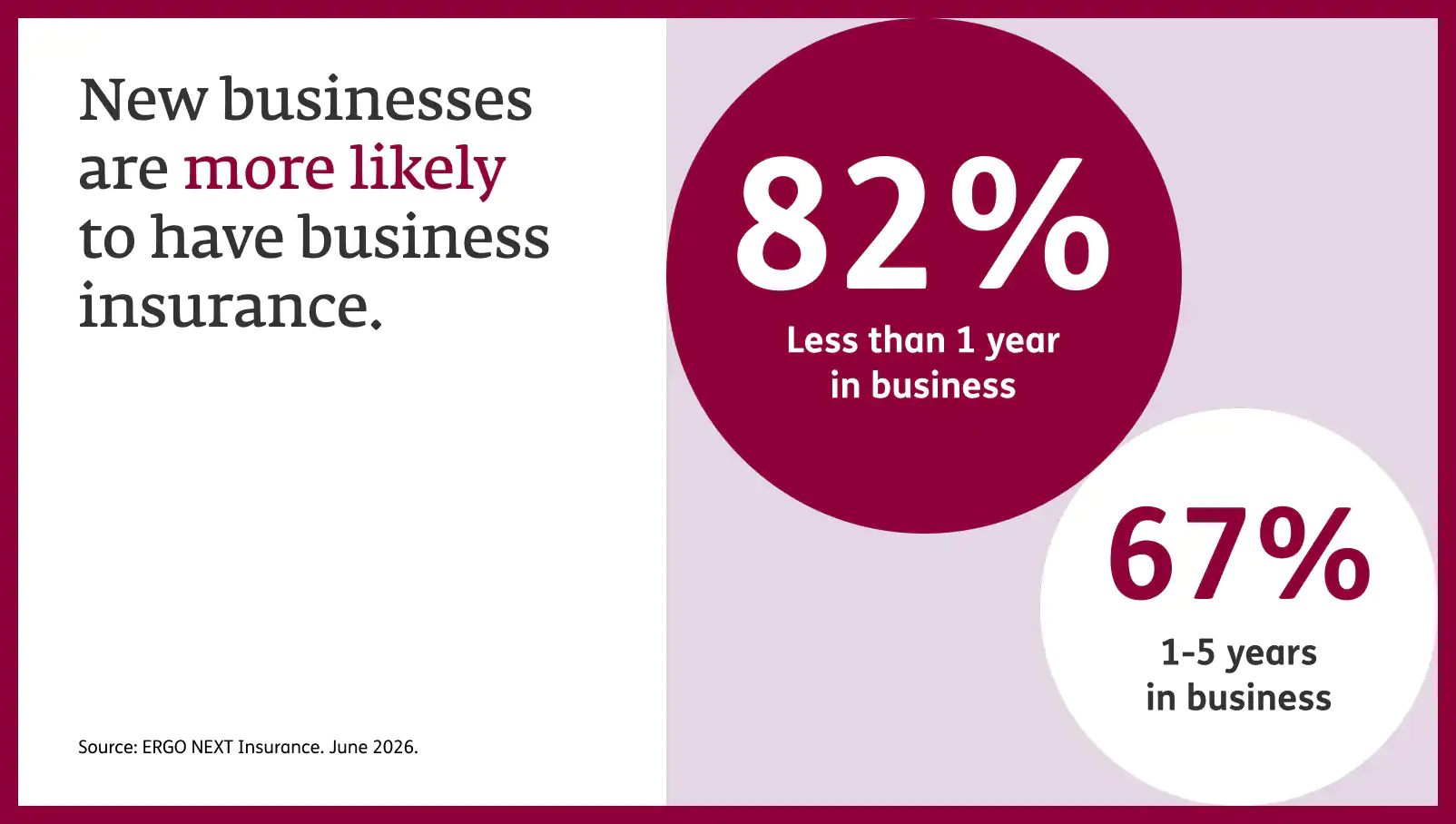
Among businesses in their first year, 82% report having business insurance, compared with 67% of businesses that have been operating one to five years.

New businesses are more likely to carry insurance than their more established peers, highlighting a potential coverage gap as companies grow.

The higher insurance adoption rate among newer entrepreneurs may reflect a combination of economic realities and changing business habits.

The last 12 months have brought economic uncertainty and an expanding range of business risks, especially cyber threats, that make insurance a more pressing consideration from day one.

At the same time, digital-first business tools have made purchasing insurance easier than ever. Entrepreneurs who are accustomed to opening bank accounts, running payroll and managing finances online can now research, compare and purchase insurance through similar digital channels.

But while it’s encouraging that more small business owners are prioritizing insurance, significant protection gaps remain.

73% of all small business are underinsured

A business is considered underinsured when its coverage doesn’t adequately protect against the most significant risks it faces.

Coverage gaps can leave business owners financially responsible for unexpected costs after liability claims, property damage, cyber attacks or other types of disruptions.

The data highlights just how common these coverage gaps have become. A quarter of small businesses (25%) don’t have business insurance, and nearly two-thirds of those who do (64%) say they’re not covered for all major risks. Of these, 14% aren’t sure what their policy covers.

That means 73% of all small businesses either have no insurance or less coverage than they ideally need.

At a time when 33% of entrepreneurs worry about their business closing on a weekly basis, having the right coverage in place can provide peace of mind for small business owners when challenges arise. Digital tools and online options make access easier than ever.

“Exporing options and buying coverage online is more convenient than ever and it can help small businesses understand the nuances of their insurance,” says Phil Natoli, vice president and chief actuary at ERGO NEXT. “It can be easier to compare your options, see what’s included and choose the coverage that fits your business when the details are laid out clearly.”

Why are most small businesses underinsured?

Our findings point to three factors driving underinsurance among small business owners:

  • Compliance requirements
  • Cost pressure
  • Uncertainty about coverage needs

It’s likely these reasons are interlinked: Entrepreneurs unsure of what insurance they truly need may default to buying the minimums required by law.


Cost and compliance determine many insurance decisions. Over half of uninsured small businesses skip insurance since it’s not required.

It also makes sense that compliance and cost go hand in hand. More than a third of small business owners (37%) say maintaining steady cash flow is a top source of stress.

When resources are limited, coverage beyond the minimum required can be difficult to prioritize alongside expenses that directly support day-to-day operations and business growth.

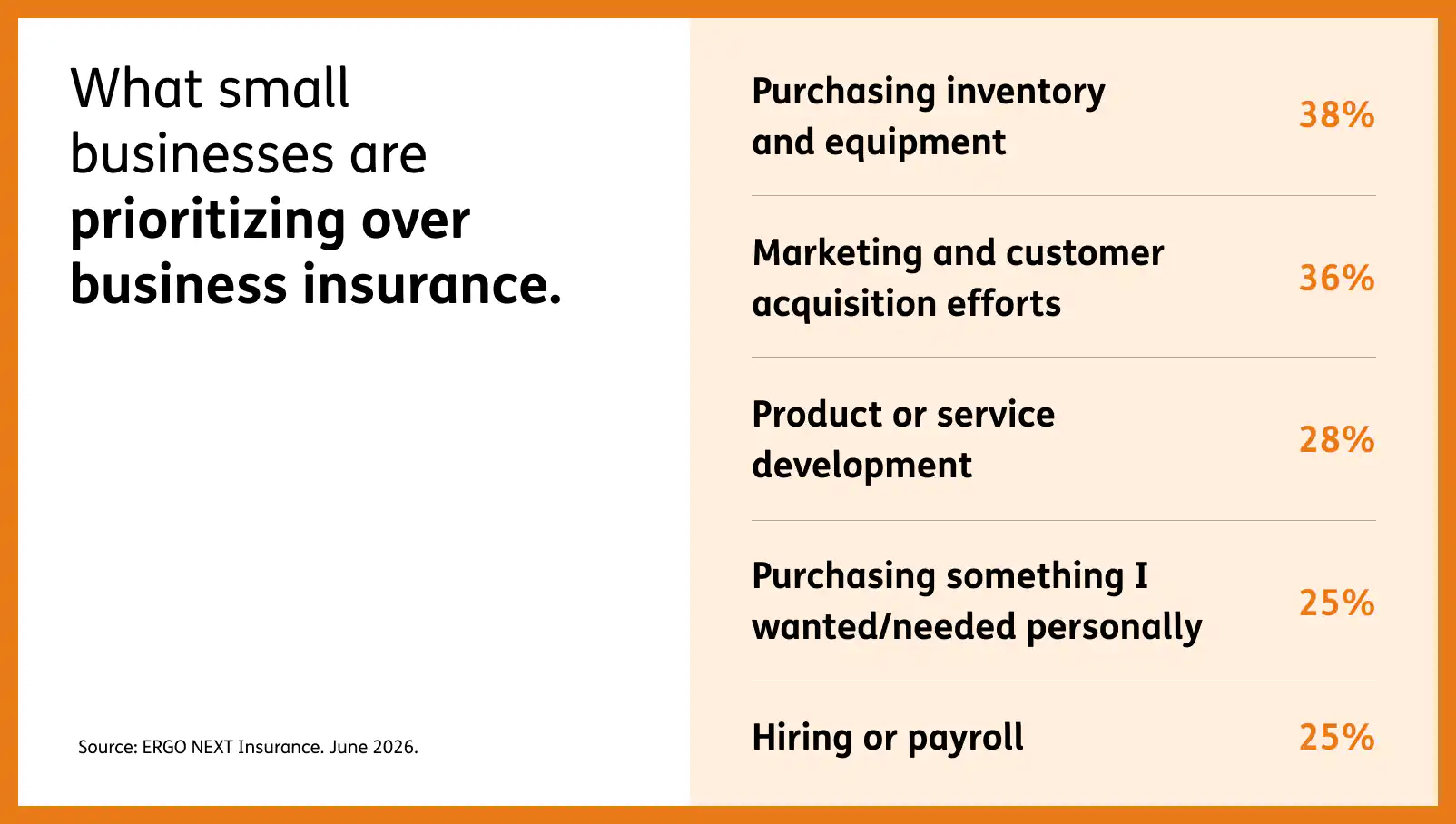
84% of small business owners say they have prioritized other expenses over business insurance in the past six months

So what are they spending on instead? Most are investing in activities directly tied to business growth and operations, such as inventory and equipment (38%) and marketing efforts (36%).

According to ERGO NEXT survey data, small firms prioritize inventory, marketing, and product development over business insurance.

When coverage isn’t required and resources are limited, many entrepreneurs feel forced to make difficult decisions about which risks they can afford to address.

Insurance confusion can lead to coverage gaps

Cost and legal requirements aren’t the whole picture. For many entrepreneurs, understanding what coverage they need, and whether they already have it, can be a challenge in itself.

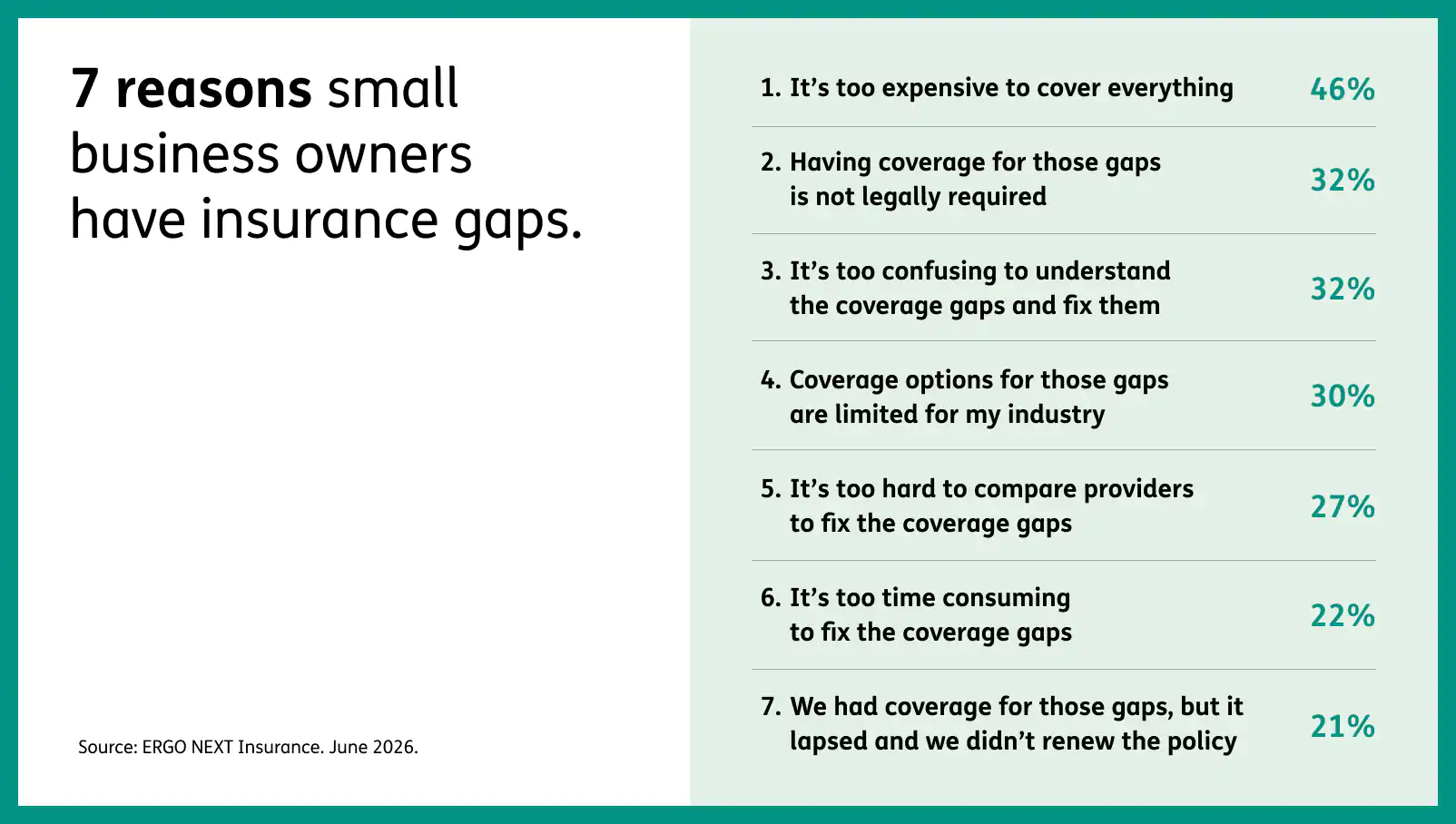
Nearly a third of small business owners who are underinsured (32%) say it’s too confusing to identify and address coverage gaps, while 27% say it’s too hard to compare providers and 22% say it’s too time-consuming.

The major reason small businesses have insurance coverage gaps is cost, but identifying and closing them is difficult.

The survey results point to a common challenge for growing businesses: Risk exposure evolves, but insurance coverage doesn’t always keep pace.

Despite that reality, only 37% of small business owners strongly agree that they regularly review and update their coverage as their company grows. As a result, policies that fit at launch may no longer align with the business’s current risks.

“Businesses evolve constantly, but insurance coverage doesn’t automatically keep pace,” Natoli says. “As companies add employees, adopt new technologies or expand into new markets, their risk exposure changes. Reviewing coverage regularly is one of the simplest ways to make sure protection keeps up with the business.”

Business insurance can be easier to navigate than many owners expect

Though underinsurance remains a risk, many business owners are not rejecting insurance outright. They’re simply navigating cost constraints, uncertain about what coverage they need and unable to find the time to unravel it.

ERGO NEXT helps simplify the business insurance process with online coverage options designed around the needs of small businesses.

Owners can explore tailored options, understand what coverage may fit their business and get a certificate of insurance quickly, so protecting what they’ve built feels more manageable.

Explore your options today: Start a free quote with ERGO NEXT.

Frequently asked questions about small business insurance

What percentage of small businesses are underinsured?

A 2026 ERGO NEXT survey found that 73% of small businesses are underinsured and 64% of insured small businesses are not covered for all major risks they face.

Why are small businesses underinsured?

The most common reasons include concerns around insurance costs, lack of legal requirements, difficulty identifying coverage gaps and confusion about what policies are needed to protect the business.

Why don't some small businesses have insurance?

ERGO NEXT found that among businesses without insurance, 54% say coverage is not legally required, and 50% say it costs too much. Other business owners report uncertainty about what coverage is needed.

How often should a small business owner review insurance coverage?

Insurance coverage should be reviewed any time a business experiences meaningful growth, adds employees, purchases equipment or expands operations. Regular reviews can help prevent coverage gaps from developing over time.

Are startups more likely to have business insurance?

Yes. ERGO NEXT found that 82% of businesses in their first year have insurance coverage, compared with 67% of businesses that have been operating for one to five years.

Methodology

ERGO NEXT Insurance surveyed 501 U.S. small business owners, founders and sole proprietors about their business risk profiles. The respondent pool consisted of 250 entrepreneurs in their first year of business and 251 entrepreneurs in their first 2-5 years of business. The survey was conducted April 29 – May 12, 2026.

Matt Crawford
About the author

Matt Crawford has spent nearly 10 years as a small business insurance specialist, helping small business owners better understand and navigate insurance. His work has been published in the LA Times, AP, SF Chronicle and SF Standard.


At ERGO NEXT, his goal is to make insurance more accessible for entrepreneurs and to celebrate small business success stories.

Small business insuranceBuy insurance in about 10 minutes
Get a Quote
What we cover
Chat with Us

Mon – Fri | 8 a.m. – 5 p.m. CT

Facebook
Instagram
Tiktok
Twitter
Linkedin
Youtube
© 2026 Next Insurance, Inc. 975 California Ave, Palo Alto, CA 94304, United States
Better Business Bureau
NEXT is part of the ERGO Group, a Munich Re company.

Issuance of coverage is subject to underwriting. Not available in all states. Please see the policy for full terms, conditions and exclusions. Coverage examples are for illustrative purposes only. Your policy documents govern, terms and exclusions apply. Coverage is dependent on actual facts and circumstances giving rise to a claim. Next Insurance, Inc. and/or its affiliates is an insurance agency licensed to sell certain insurance products and may receive compensation from insurance companies for such sales. Policy obligations are the sole responsibility of the issuing insurance company. Refer to Legal Notices section for additional information.

* To the extent permitted by law, applicants are individually underwritten, not all applicants may qualify. Individual rates and savings vary and are subject to change. Discounts and savings are available where state laws and regulations allow, and may vary by state. Certain discounts and policy start times apply to specific coverages only.

** Coverage examples are for illustrative purposes only. Your policy documents govern, terms and exclusions apply. Coverage is dependent on actual facts and circumstances giving rise to a claim.

Any starting prices or premiums represented before an actual customer quote are not guaranteed and are representations of existing premiums of active policies as of April 1, 2026. To the extent permitted by law, applicants are individually underwritten, not all applicants may qualify. Individual rates and savings vary and are subject to change. Discounts and savings are available where state laws and regulations allow, and may vary by state. Certain discounts apply to specific coverages only.